


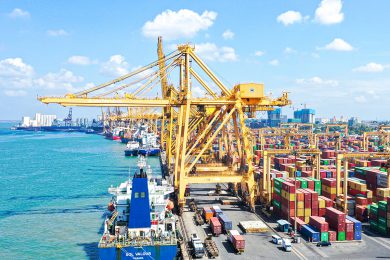
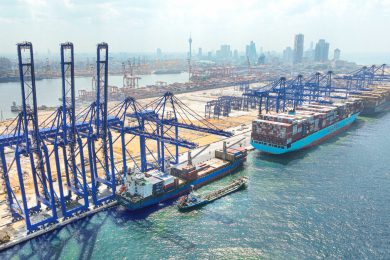
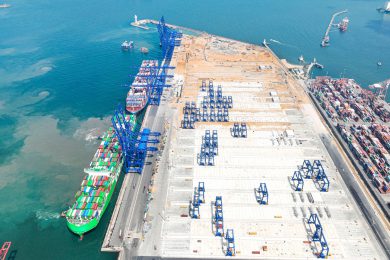

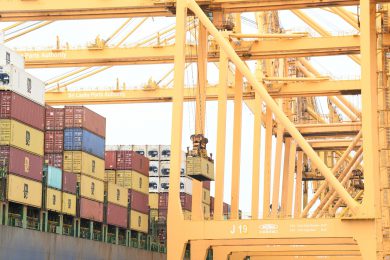



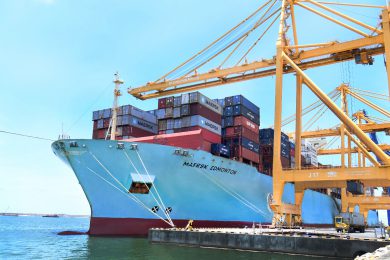
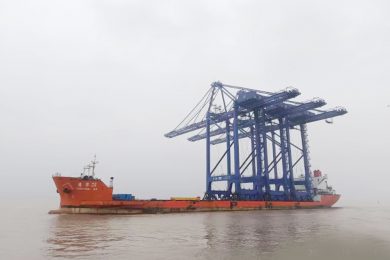






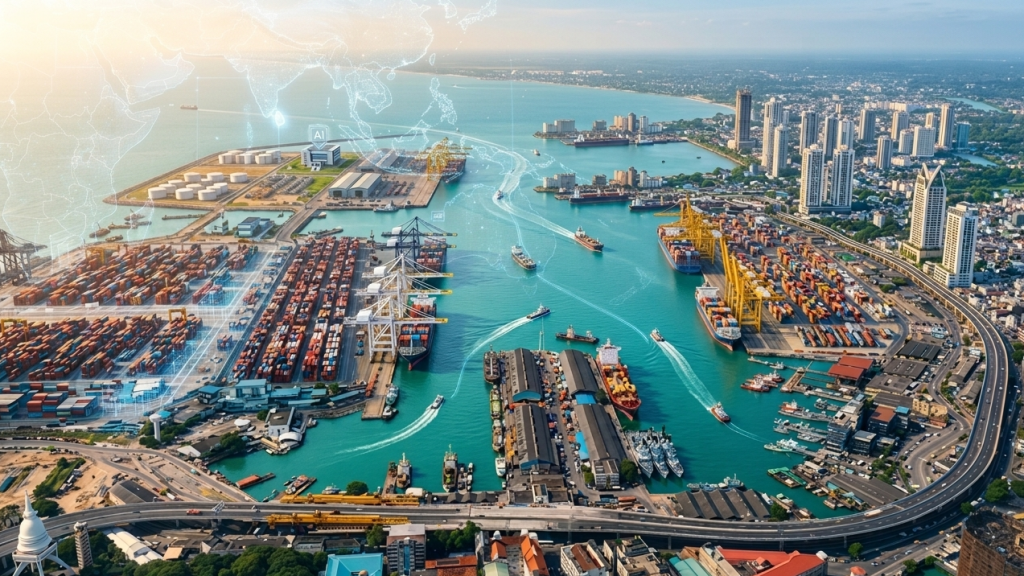
Predictive analytics, digital twins, and generative AI are shifting ports from reactive operations to real-time decision engines.
The Maritime Mobility Imperative
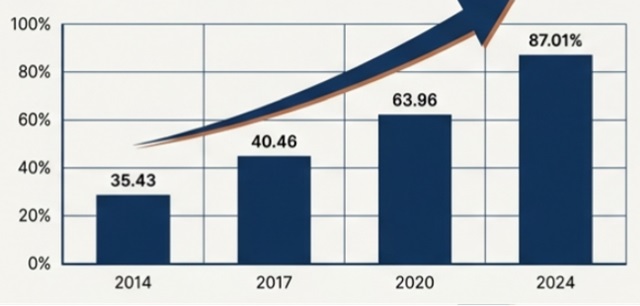
South Asia’s seaports form the circulatory system of one of the world’s fastest-growing economic regions. India alone routes more than 95 percent of its international trade volume through maritime channels, yet logistics costs hover near 13 to 14 percent of GDP — nearly double the OECD average — while vessel turnaround times remain elevated and hinterland bottlenecks regularly nullify efficiency won at the terminal gate. Rapid port expansion has exposed a deeper structural gap: not a shortage of berths, but a shortage of operational intelligence. Converting South Asia’s natural geographic advantage into sustained trade competitiveness now demands a decisive shift from basic digitisation to AI-driven decision-making across the entire maritime supply chain.
Redefining Mobility in a Maritime Context
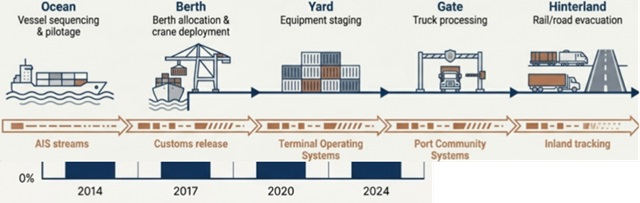
In the logistics lexicon, “maritime mobility” extends well beyond the movement of ships. It encompasses the full journey of cargo — vessel arrival sequencing, berth allocation, crane deployment, yard planning, gate processing, customs clearance, and hinterland transit by road, rail, and inland waterway. Fragmentation at any node creates cascading delays: a container that clears its berth in hours can still sit in a port yard for days awaiting a customs release or a truck booking. True mobility demands real-time data orchestration across every stage, and that is precisely where Artificial Intelligence and Generative AI offer transformative potential.
Predictive Analytics and Route Optimisation
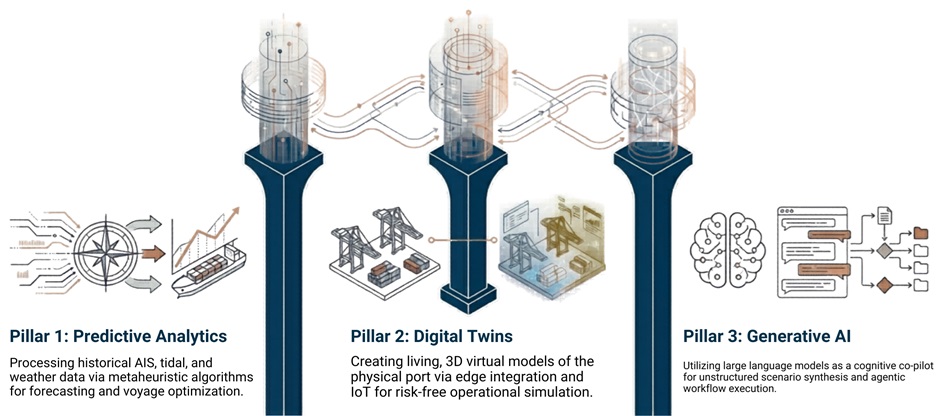
Traditional port operations have been inherently reactive. AI-driven predictive analytics inverts this dynamic by analysing historical port call data, Automatic Identification System (AIS) streams, weather feeds, and equipment performance logs to forecast vessel arrivals, berth demand, and gate surges well in advance. The result is Just-in-Time (JIT) berthing — incoming vessels modulate their speed to align with berth availability, eliminating idle anchorage waiting and cutting vessel fuel consumption by up to 15 percent. JNPA (Jawaharlal Nehru Port Authority), India’s largest container port, has committed to AI-driven route optimisation, demand forecasting, and predictive maintenance as part of its smart-port programme, while CMA CGM’s R&D hub in Chennai, established in partnership with Capgemini, focuses on advanced AI-led forecasting to anticipate supply chain disruptions and improve routing efficiency across South Asian trade corridors.
Digital Twins and Port Intelligence
A digital twin is a live, continuously updated virtual replica of a port’s physical environment, fed by sensors, cameras, GPS transponders, and transaction systems. Its strategic value lies in simulation: operators can test revised berth plans, model the cascading impact of equipment failure, or stress-test responses to a cargo surge — all before touching the real operation. India’s V.O. Chidambaranar (VOC) Port at Tuticorin, the first Indian major port to deploy a full digital twin platform, integrates real-time berth occupancy, yard capacity visualisation, AI-based predictive maintenance, and energy tracking in a single operational picture. The port projects a vessel turnaround time reduction of up to 25 percent. Deendayal Port Authority has launched a comparable initiative covering 25 square kilometres, using computer vision and edge computing to monitor crane utilisation and vehicular movement in real time.
Generative AI: Scenario Simulation and Smart Documentation
Where traditional AI predicts, Generative AI reasons. By drawing on large language models and simulation frameworks, it can synthesise complex multi-variable scenarios, draft operational alternatives, and deliver decision support in plain language. VOC Port has piloted “Port GPT,” a conversational AI assistant that allows shipping agents and port staff to query vessel schedules, cargo status, and procedures through natural dialogue — reducing cognitive load and making operational data accessible to non-specialist users. At the policy level, Generative AI enables scenario planning that was previously impractical: a port authority can model how a trade-policy shift or a monsoon disruption would propagate across vessel schedules, berth allocations, and inland corridors, and develop response strategies before the event materialises.
Smart documentation represents perhaps the highest near-term impact. The International Maritime Organisation made Maritime Single Windows mandatory from January 2024. India’s National Logistics Portal Marine already functions as a national single-window platform, while AI-powered document processing automates Harmonised System code classification, cross-checks compliance filings, and flags anomalies before a vessel arrives — compressing customs clearance from days to hours. Bangladesh has entered pilot implementation of its National Single Window and Automated Risk Management System, and Sri Lanka is building a Port Community System with ADB support to automate data exchange across Colombo’s logistics ecosystem.
Challenges: Bridging the Implementation Gap
The transition faces real obstacles. A digital divide separates large container hubs from smaller regional ports, fragmenting the data ecosystems on which AI depends. Data quality and interoperability remain major bottlenecks: models trained on incomplete records produce unreliable outputs, and without human-in-the-loop oversight the risk of algorithmic error is genuine. Regulatory frameworks for data sharing and AI accountability are nascent across most regional jurisdictions. Most critically, the maritime sector faces a severe shortage of professionals trained in data analytics and digital operations — a skills gap that technology alone cannot close.
A Blueprint for Action
Three priorities stand out. First, align port digitalisation with national logistics architectures. In India, this means integrating port digital twins and customs workflows with PM Gati Shakti’s multimodal infrastructure planning platform and the Unified Logistics Interface Platform (ULIP), which connects 43 systems across 11 ministries and has processed over 100 crore transactions. A port that shares real-time data with inland rail schedulers and road freight operators delivers exponentially more mobility than one that optimises in isolation. Second, establish public-private data-sharing ecosystems with clear governance frameworks covering security, privacy, and access rights — unlocking the collaborative intelligence no single actor can generate alone. Third, invest in people through dedicated training academies, university partnerships, and structured change management programmes that turn AI adoption into an opportunity for high-value workforce development rather than displacement.
The Horizon Ahead
By 2030, South Asia’s best-performing maritime corridors are poised to function as integrated logistics grids: vessels pre-cleared before arrival, customs released algorithmically, and digital twins orchestrating yard, crane, and hinterland movements in real time. The region’s strategic position at the crossroads of global trade is a fixed endowment; converting it into competitive advantage depends on the pace and quality of digital transformation. The integration of AI and Generative AI is not a distant aspiration — it is an active investment already reshaping how ports operate, how cargo moves, and how supply chains absorb shocks. For India and its neighbours, the imperative is clear: build the data foundations, governance frameworks, and human capabilities that allow intelligent mobility to reach not just the terminal gate, but every link in the maritime supply chain.

About Author: Dr Nalinda Somasiri is an Associate Professor and Associate Dean for Data Science and Computer Science at York Business School, York St John University (London Campus), where he also serves as a Postgraduate Research Supervisor. He is a seasoned AI, Machine Learning, and Blockchain practitioner with over 20 years of industry and academic experience, including previous roles at Motorola Solutions, Jaguar Land Rover, and MBDA, where he delivered advanced AI/ML solutions for public safety and defence applications.
Disclaimer Note: The views and opinions expressed in this article are solely those of the author and do not necessarily reflect the official policy, position, or views of the publisher or affiliated institutions.
